The cellphone is already Brazil's POS machine
The Tap to Phone market in Brazil has already scaled: it moved R$ 27.1 billion in Q1 2026. See how to launch the technology under your brand with Akua's infrastructure.
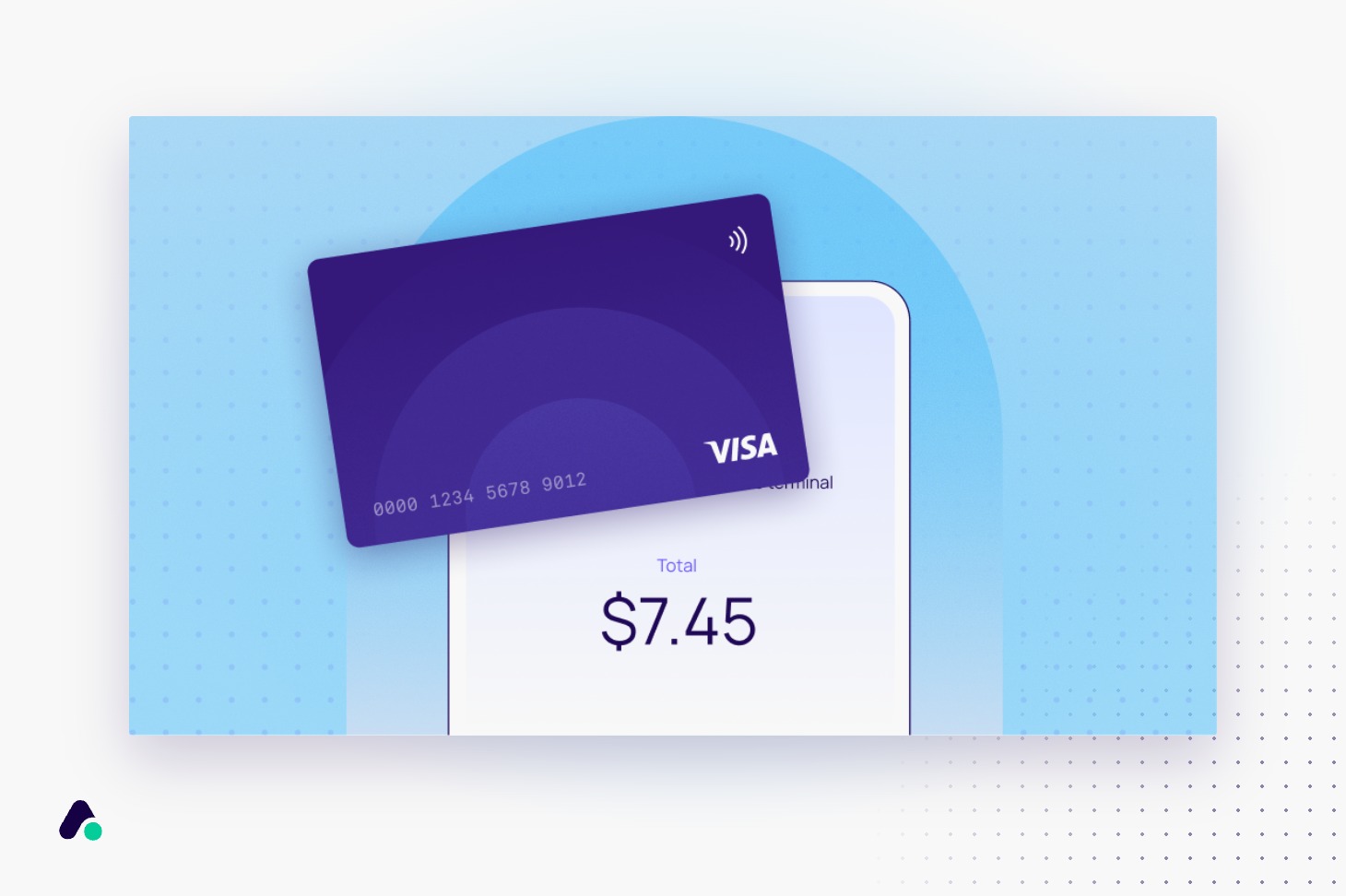
The Brazilian Tap to Phone market is not in a testing phase. It has already scaled.
Over the last two years, Tap to Phone transactions grew by 1,188.8% in Brazil. In the first quarter of 2026, this modality moved R$ 27.1 billion — a jump of 114.6% over the R$ 12.6 billion from the same period in 2025 (source: Abecs, Q1 2026). The projection is that the volume will close 2026 at R$ 100 billion. This is not an emerging trend; it's a market that has already decided its path.
It's worth looking at the complete series, because it tells the story better than any projection: in 2024, Tap to Phone was still residual; in 2025, it moved R$ 78 billion, a 241% increase over the previous year; and the first quarter of 2026 alone already represents more than a quarter of the annual goal (source: Abecs). No other acceptance technology in the country grew at this pace in the same interval.
Why this is happening now
Tap to Phone solves an old problem in the simplest way possible: it transforms the cellphone the merchant already owns into a payment terminal. No additional hardware, no CAPEX.
This changes the calculation for those who historically remained outside card acceptance. Micro-commerce is the least penetrated segment in the region and also the one that benefits most from eliminating the barrier of investment in a POS machine.
But adoption wouldn't be happening if the other side of the counter wasn't ready. And it is. In the first half of 2026, proximity payments moved R$ 1 trillion in Brazil, an increase of 18.5% year-on-year, and now account for 76.2% of all in-person card transactions (source: Abecs, H1 2026). Three out of every four in-store purchases in the country are contactless. A survey by Abecs with Datafolha shows that 73% of Brazilians already use NFC payments, and 91% of respondents cite convenience and speed among the benefits.
In other words: consumer behavior has already been built. The gesture of tapping is the standard. What Tap to Phone does is reduce the cost of setting up an acceptance point compatible with this gesture to practically zero.
The growth is also distributed, not concentrated in a single product. In Q1 2026, credit accounted for R$ 25.4 billion of the Tap to Phone volume (+115.6%), debit for R$ 1.2 billion (+105.4%), and prepaid for R$ 0.5 billion (+92.6%) – all growing over 90% year-on-year (source: Abecs, Q1 2026). It's not a low-ticket niche expanding; it's the modality gaining space across the entire base of card products.
Brazil is not a follower in this market. It's a reference.
Visa data places Brazil among the top three markets worldwide in Tap to Phone adoption, behind only the United States and the United Kingdom. This is an unusual position: in most payment technology cycles, the country adopts later. Here, it adopted simultaneously — and at a faster pace.
The explanation is structural. Brazil combines three conditions that rarely appear in the same market: a widely distributed park of NFC-enabled smartphones, a consumer base already accustomed to proximity payments, and an enormous long tail of informal merchants, freelancers, and self-employed professionals without their own terminals. This is exactly the scenario where SoftPOS has the most traction.
This context matters for those deciding roadmap priorities. A product that abroad is still presented as a bet, in Brazil is already an expected offering. The reference for comparison is no longer the early adopter — it's the competitor who launched last quarter.
The window is open, but not for long
In markets that grow at this pace, those who arrive first tend to capture a disproportionate share of merchants. After the first players consolidate the base, the dispute shifts from "who offers Tap to Phone" to "who takes Tap to Phone from those who already offer it." It's a narrower window than it seems.
There's an important detail in this dynamic: acceptance is a high-stickiness product. Once a merchant starts receiving, reconciling, and anticipating payments through one provider, switching means redoing operational routines, cash flow, and the relationship with their own revenue. The cost of switching is not in the technology, it's in the habit. This favors early entrants and penalizes late entrants in a much less reversible way than most feature comparisons suggest.
Meanwhile, the total market continues to grow. The card industry in Brazil moved R$ 4.5 trillion in 2025, an increase of 10.1%, and in Q1 2026 totaled R$ 1.1 trillion, an 8.3% advance — an average of 132 million payments per day (source: Abecs). Tap to Phone is still a small fraction of this total. That's precisely where the capture space lies.
For banks, fintechs, and acquirers who haven't launched yet, the question is no longer whether it's worth it. It's how long it will take to launch.
What changes when NFC acceptance is under your brand
With Akua, NFC acceptance is end-to-end white label: proximity payments on any NFC-enabled smartphone, with iOS and Android SDKs under the client's brand. Your institution appears in the merchant's journey, not the provider.
- Direct connection and certification with Visa and Mastercard
- Same API used for checkout, payment links, tokenization, and reconciliation
- Cloud-native infrastructure, ISO 27001 and PCI-DSS 4.0, with AI operating the processing
This means that Tap to Phone doesn't come in as an isolated product. It integrates with what the institution already processes, with the same technological base and without relying on a third-party solution with another company's brand stamped on the end-user experience.
The difference appears the day after launch. If NFC acceptance runs on a separate provider, the institution inherits two data inventories, two risk models, two reconciliations, and two support points. With Akua, the proximity transaction is born within the same reports, the same anti-fraud rules, and the same settlement cycle that already exists — because it's the same API that already processes the rest of the operation.
In-person acceptance also doesn't tolerate downtime: a merchant who can't charge at the counter doesn't reschedule the sale. Akua processes more than 10 million transactions per day with 99.995% availability, in an active-active architecture across two AWS regions, and operates native AI in processing — which reduces the cost of reconciliation, dispute, and monitoring routines by up to 80%. And because it's the same platform that serves all of Latin America, the Tap to Phone you launch in Brazil doesn't need to be rebuilt when the operation crosses the border.
Launching Tap to Phone doesn't have to take a year
This is the central point: the barrier to entry was never market demand; it was integration time. With the right infrastructure, that timeframe is no longer measured in quarters.
It's worth separating what truly consumes time in an NFC acceptance project. Four fronts usually define the timeline:
Certification with card schemes. This is the critical path item in any SoftPOS project and the one least dependent on engineering effort from the client side. Since Akua already operates with direct connection and current certification with Visa and Mastercard, this front is removed from your timeline. SDK and in-app experience. Here the work is product-related, not infrastructure: where the billing flow enters the app, how the merchant is enabled, what information appears in the confirmation. With Akua's SDKs, you control brand and journey without building the acceptance engine. Onboarding and sub-merchant risk. Enabling micro-merchants at scale is a KYC and rule problem, not a terminal problem. With Akua in the PayFac as a Service model, this flow shares the same database and decision engine as the rest of the operation, instead of becoming a parallel registration. Post-transaction operation. Reconciliation, settlement, chargebacks, and reports. With Akua, NFC acceptance uses the same API as checkout and payment links — this front is not rebuilt; it's already in place.The actual time for a Tap to Phone launch is the sum of what the institution needs to build. With Akua, certification, processing, risk, and reconciliation come ready in the same infrastructure: what remains is app integration and product definition.
The Brazilian market has already answered the demand question. What is now in dispute is the calendar.
Akua is already available for integration. Talk to the sales team and understand how to get Tap to Phone live under your brand, or start on the Tap to Phone page.
Schedule a conversation →Sources
Abecs — card sector balance sheet, Q1 2026 and H1 2026 (tap on phone volume, cumulative growth, NFC as % of in-person transactions, card industry)
Abecs / Datafolha — survey on proximity payment adoption
Visa — Brazil's position in the global ranking of tap on phone adoption